03 APRIL 2026

Celebrating 25 Years of Vanquish | History Corner

Celebrating 25 Years of Vanquish | History Corner

As company Historian, I have the privilege of exploring every aspect of Aston Martin’s story – from models and factories to the people behind them.  Occasionally, that means revisiting moments I experienced first-hand.  With that in mind, this month I look back 25 years to the launch of Vanquish – a car that marked a true turning point for the business.
The arrival of Vanquish in 2001 cannot be overstated.  It wasn’t simply a new model - it signalled the beginning of a new era, while also bringing to a close a chapter of traditional car building that had defined Aston Martin since 1955.

Newport Pagnell, our home for decades, had been producing vehicles since the 1830s – initially horse-drawn before transitioning to motor cars in the 1900s. The car that is most relevant to this story is the DB4, which was launched in 1958. The floor pan of the DB4 was modified continuously over the decades, through DB5, DBS with elements of it finding their way into the DBS of 1967. That first DBS model became the DBS V8 and spawned a whole series of V8 models that evolved over 30 years, ending with the magnificent Vantage, with its 550 bhp 5.3 V8 (or the upgraded V600 variant). The last of those V8 models - each taking around 3 months to build - rolled off the line at Newport Pagnell at the end of 2000.

To appreciate the significance of Vanquish – it’s worth stepping back and looking at Aston Martin as it stood 25 years ago.

By 2000, Aston Marin had built just over 18,450 cars since 1914. With nine of those years affected by wartime, that equates to an average of 236 cars per year – a reminder of just how small and specialised the business had been for much of its history. 

At the turn of the millennium, the range consisted of the DB7 models built at Bloxham (in coupe and Volante form), alongside the final hand-built V8 models at Newport Pagnell (V8 Volante and twin supercharged Vantage). That year marked the first time production exceeded 1,000 cars – driven largely by DB7 while just 29 of the V8 models were completed at Newport Pagnell by a highly skilled workforce, some of whom had been with the company since the late 1940s. These ‘V-cars’, as we called them, were exceptional machines – powerful, beautifully crafted and entirely hand built - with handmade aluminium panels attached to a steel frame and floor pan. They were incredibly strong cars, but also very heavy and costly to build.

The Vanquish was revolutionary. It changed everything.  It introduced a fundamentally different approach to construction – not just for Aston Martin, but in comparison to other cars of the time. At its core was an aluminium tub, with a carbon fibre transmission tunnel. The A-posts were also carbon fibre, as was the boot floor and front crash structure, added later in the build process. The sides of the car were composite, with aluminium rear wings and roof panel bonded on top. All the body was constructed with adhesives, no welding at all. This marked a completely new way of building an Aston Martin, influencing the development of future models such as DB9. Despite this, traditional craftsmanship remained.  Panels were still hand-finished, with a panel beater taking around four hours to complete a wing, and up to eight hours for the boot lid. Despite this, the build time was significantly reduced compared to previous V-cars, at around 6 weeks per car.

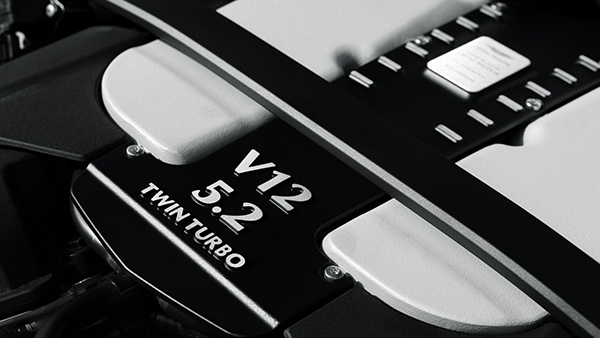
The production Vanquish was proceeded by the 1998 ‘Project Vantage’ concept, which introduced the V12 engine that would appear in the DB7 Vantage a year later. This V12 would go onto power the Vanquish and has served in many guises ever since.

Vanquish itself evolved into the Vanquish S in 2004, offering increased power (up from 460bhp to 520bhp) and performance (a genuine 200mph top speed) before production concluded at Newport Pagnell in 2007 with a special edition (the Vanquish S Ultimate).  In total, 2,588 cars were built - a significant figure for Aston Martin at the time.

Taking into account both its contribution to our overall sales and its technical innovation, Vanquish stands out as a true landmark model for Aston Martin.

Where DB7 brought significant volume to the business (over 7,000 cars) and conventional car construction methods, Vanquish pushed sports car design to a new level.

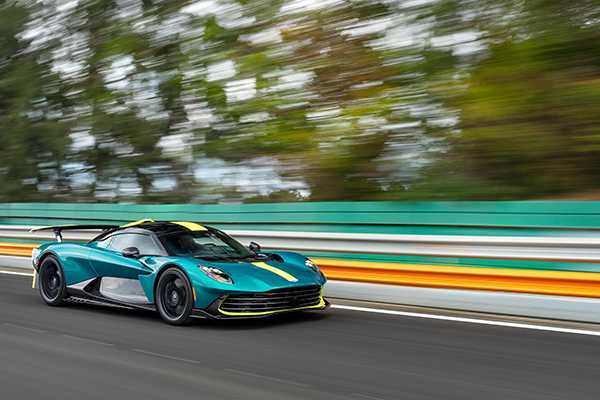
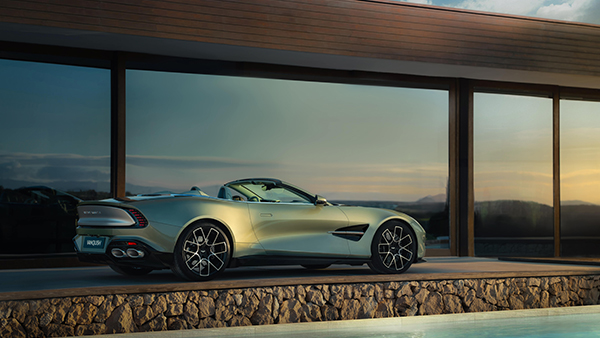
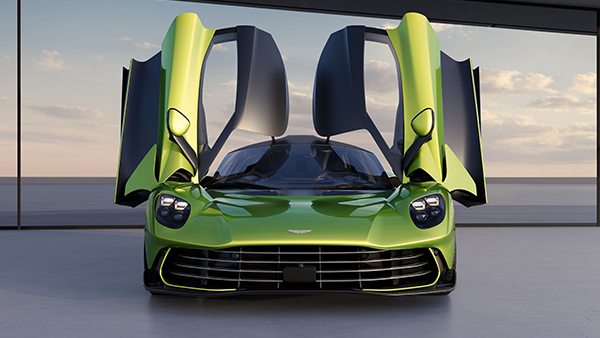
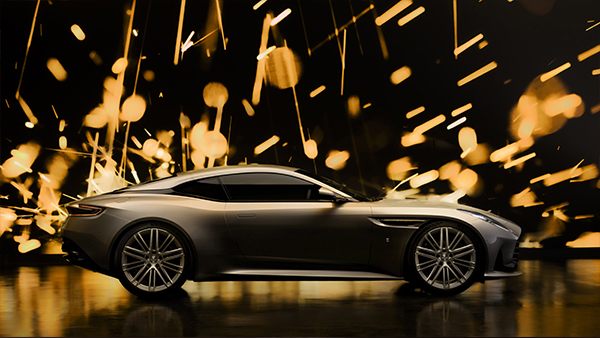
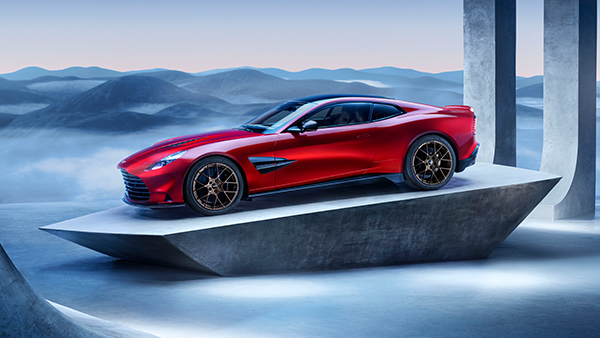
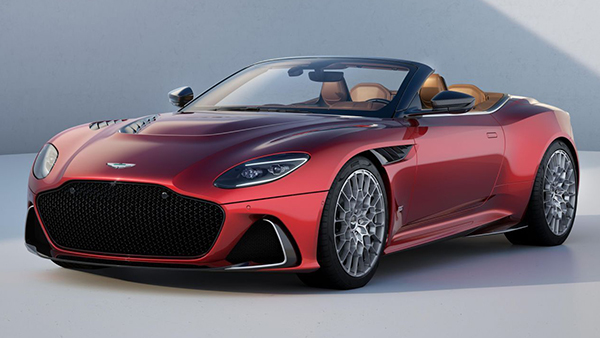
Today, the Vanquish name sits proudly alongside Vantage and Volante as a defining part of our brand.  Each of the three generations has bult on that legacy, earning a devoted following and reinforcing its place in our history. 

Words by Aston Martin Company Historian, Steve Waddingham